Small Modular Reactors (SMRs) for AI Datacenters: 2026 Nuclear Power Purchase Agreements and Megawatt Economics
"Engineering and financial assessment of 300 MW Small Modular Reactor colocation, behind-the-meter nuclear PPA contracts, and hyperscaler energy constraints."
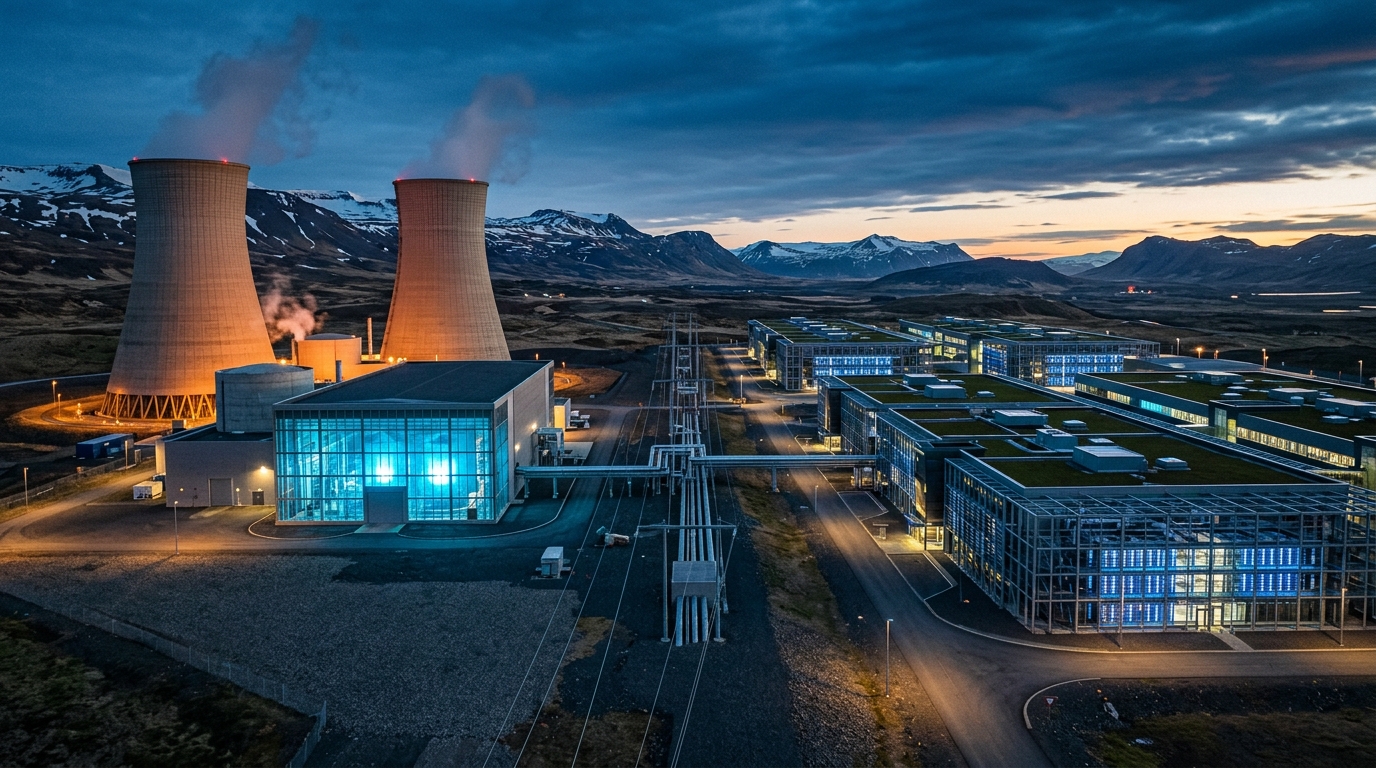
The Gigawatt Bottleneck in Frontier AI Clusters
The primary constraint facing hyperscale AI deployments in late 2026 is no longer silicon supply—it is electrical grid interconnection capacity. Frontier training clusters requiring 250,000+ accelerators demand steady baseload power between 300 MW and 800 MW. Traditional regional electrical grids cannot satisfy these interconnection requests without multi-year transmission upgrades.
To bypass grid congestion, hyperscalers (Amazon Web Services, Microsoft, Google) have signed landmark behind-the-meter Power Purchase Agreements (PPAs) colocating Small Modular Reactors (SMRs) directly adjacent to computing campuses.
⚡ Commercial SMR Reactor Platforms Compared
| Reactor Platform | Manufacturer | Electrical Output | Coolant Technology | Commercial Online Target | Levelized Cost (LCOE) |
| :--- | :--- | :--- | :--- | :--- | :--- |
| BWRX-300 | GE Vernova / Hitachi | 300 MWe | Boiling Water (Passive Safety) | 2028 Pilot / 2029 Scale | $68 / MWh |
| VOYGR-6 | NuScale Power | 462 MWe (6-Pack) | Pressurized Light Water | 2029 Volume | $74 / MWh |
| Xe-100 | X-energy | 320 MWe (4-Pack) | High-Temp Gas (TRISO Fuel) | 2028 Commercial | $71 / MWh |
| Natrium | TerraPower | 345 MWe (+ Storage) | Liquid Sodium (Molten Salt) | 2029 Testing | $65 / MWh |
---
🏗️ Behind-The-Meter Colocation Engineering
By placing nuclear generation facilities on the same physical substation footprint as the GPU cluster:
1. Elimination of Transmission Losses: Eliminating high-voltage transmission lines cuts line losses by 7.2%, saving millions annually in wasted power.
2. Zero-Intermittent 24/7 Capacity Factor: SMRs maintain a capacity factor exceeding 94.8%, far outpacing solar (24%) and onshore wind (34%) without requiring massive chemical battery buffers.
---
🔗 Key Related Intelligence
Related Intelligence Briefs
Silicon-Carbon Composite Anodes: Commercial 450 Wh/kg Cell Chemistry and Sub-10-Minute EV Charging Speeds
Materials science analysis of silicon-carbon nanoporous anodes, volumetric expansion mitigation, and next-generation fast-charging cell production in 2026.
Next-Gen Enhanced Geothermal Systems (EGS): Hydraulic Shearing Breakthroughs and 24/7 Clean Grid Baseload
Clean energy technology report on deep horizontal directional drilling, supercritical geothermal reservoirs, and 24/7 clean baseload power contracts.
Micro-LED Waveguide Optics in 2026: Commercial 10,000 Nit Displays and Spatial Computing Silicon Packaging
Hardware teardown of all-day augmented reality glasses, sub-micron RGB Micro-LED mass transfer, diffractive surface relief waveguides, and optical silicon.